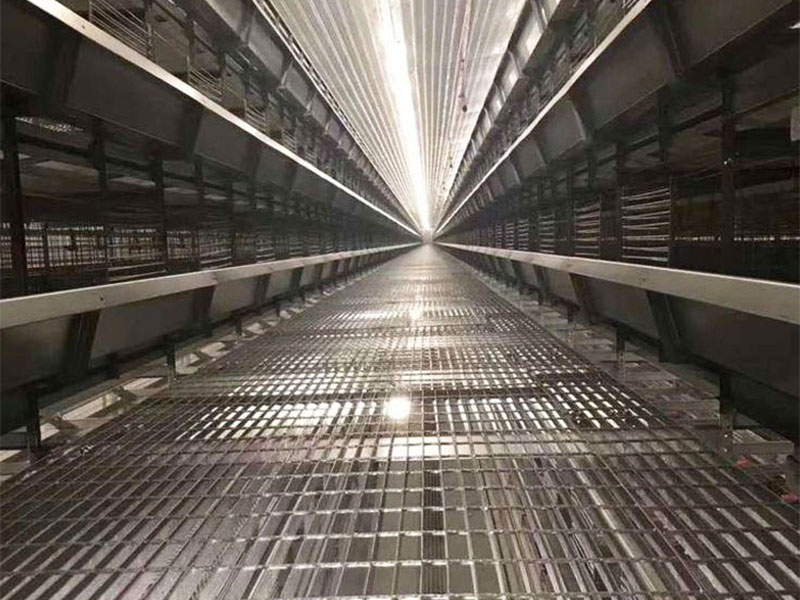
The global and domestic egg farming industry has undergone profound structural upgrades from 2025 to 2026, phasing out the extensive model of manual breeding and simple cage raising. Latest industry reports, livestock enterprise upgrades, and poultry market research news confirm that automated and intelligent breeding equipment is no longer a competitive advantage for large-scale farms, but a mandatory necessity for standardized poultry operations. Among all smart breeding devices, automated egg collection cage systems have become the core upgrade facility for poultry farms of all sizes. Based on the latest industry trends, labor shortages, stricter quality regulations, large-scale industrial transformation, upgraded biosecurity standards, and intensified market competition are the five fundamental reasons forcing farms to purchase and deploy automated egg collection systems.
1. Severe Labor Shortage and Skyrocketing Manual Breeding Costs
The most prominent pain point of the current egg farming industry is the continuous tightening of agricultural labor supply and rising labor costs, which has become the primary driving force for the popularization of automated egg collection equipment. Recent 2025–2026 poultry industry surveys show that fewer workers are willing to engage in repetitive, high-intensity manual egg collection work, resulting in a persistent labor gap in grassroots breeding bases.
According to the latest cost analysis news of the poultry industry, a medium-sized farm with 10,000 laying hens requires 3 to 5 full-time egg collectors under traditional manual modes, with labor costs accounting for over 30% of total operating expenses. Farms without automated equipment have 35% higher labor operating costs than intelligent farms. In contrast, integrated automated egg collection cages realize automatic egg collection, transmission, and sorting in one process. Field operation data from smart breeding bases shows that such equipment reduces on-site egg collection labor demand by more than 80%. It completely solves the industry dilemmas of difficult recruitment, high labor costs, and high staff turnover, while eliminating efficiency fluctuations caused by worker fatigue and shift changes, stabilizing overall farm operation efficiency.
2. Strict New Egg Quality Standards Make Manual Collection Unqualified
From late 2025 to early 2026, new national safety and circulation regulations for fresh eggs have been fully implemented, with market supervision authorities issuing stricter industrial standards for egg integrity, surface cleanliness, and breakage rates. The traditional manual egg collection model can no longer meet market compliance requirements, forcing farms to accelerate intelligent transformation.
Multiple agricultural industry media reports have exposed that numerous small and medium-sized farms have been ordered to rectify operations or restricted from supplying supermarket channels due to excessive egg breakage, residual dirt on eggshells, and mixed defective eggs caused by manual sorting. Statistically, manual egg collection and handling lead to a 3%–5% egg breakage rate due to frequent collision and extrusion, while manual sorting fails to accurately screen defective and dirty eggs. Equipped with flexible transmission and intelligent buffer technology, modern automated egg collection cages control the actual egg breakage rate below 0.5%. The system supports 24-hour standardized operation, completing egg collection, cleaning, and grading uniformly. It ensures consistent egg appearance and cleanliness, fully complying with the latest fresh egg market access standards and securing stable sales channels for farms.
3. Large-Scale Industrial Transformation Outpaces Traditional Breeding Models
According to the National Animal Husbandry Mechanization Development Report (2021–2025), the domestic poultry farming equipment market scale reached 14.27 billion RMB in 2025, with the penetration rate of large-scale, mechanized, and intelligent breeding continuing to rise. 2026 industry research news indicates that scattered small-scale household breeding is gradually exiting the market, and large-scale farms with over 10,000 laying hens account for more than 70% of the total industry, marking a significant increase in industrial concentration.
As breeding scale expands, the efficiency defects of manual egg collection become increasingly prominent. Manual operation features slow speed, limited coverage, and high missed collection rates. Large chicken houses cannot achieve full daily egg collection, easily causing egg retention, breakage, and pecking losses among flocks. Automated egg collection cage systems perfectly adapt to high-density large-scale cage breeding. They intelligently adjust collection frequency and speed according to flock scale, realizing all-weather, dead-angle-free automatic egg collection. Meanwhile, the equipment connects with big data breeding systems to record daily egg production and defective egg ratios in real time, providing accurate data support for production scheduling and sales management, helping farms transform from extensive breeding to refined, data-driven operation.
4. Upgraded Biosecurity Standards Reduce Human-Mediated Disease Risks
In 2026, the livestock and poultry breeding industry prioritizes the construction of biosecurity prevention and control systems. Local agricultural authorities have issued new regulations requiring large-scale farms to reduce personnel entry and exit in chicken houses to cut off external disease transmission channels. Frequent manual entry for egg collection has been listed as a key biosecurity hazard in modern farming.
Latest intelligent breeding practice releases from leading agricultural enterprises confirm that frequent personnel access and direct manual contact with flocks and eggs are major causes of cross-infection of bacterial and respiratory diseases in poultry. Traditional egg collection requires workers to enter chicken houses multiple times daily, easily carrying external pathogens and causing secondary pollution to eggs. Automated egg collection cages realize unmanned egg collection throughout the process without manual house entry, greatly reducing human contact with flocks and breeding environments. This fundamentally lowers the risk of cross infection, consolidates the farm’s biosecurity defense line, and effectively avoids economic losses caused by poultry diseases.
5. Intensified Industry Competition Makes Automation a Core Profit Barrier
Currently, the egg farming industry faces fierce homogeneous competition, with feed costs and market egg prices becoming highly transparent. Cost reduction and efficiency improvement have become the core of farm profitability. 2026 industry benefit comparison data shows that intelligent farms equipped with automated egg collection cages achieve over 20% higher comprehensive breeding benefits than traditional manual farms, with obvious advantages in cost control, production capacity, and product premium.
In long-term operation, automated systems not only save labor costs and reduce egg loss but also stabilize the breeding environment. Integrated intelligent cage systems link environmental control, manure cleaning, and egg collection devices to maintain constant and comfortable chicken house conditions, reduce flock stress response, and steadily improve egg production rate and egg quality. High-quality eggs with ultra-low breakage rates can directly supply supermarkets, fresh food platforms, and brand dealers, obtaining higher market premiums. In the context of shrinking industry profit margins, upgrading to automated egg collection cages is no longer an optional upgrade but a necessary measure for farms to reduce costs, stabilize profits, and enhance market competitiveness.
Conclusion
Synthesizing 2025–2026 poultry industry policies, industrial transformation trends, and market operation data, the widespread adoption of automated egg collection cage systems is an inevitable result of industrial upgrading driven by labor reform, quality supervision, large-scale development, biosecurity iteration, and market competition. Intelligent, unmanned, and standardized breeding will become the mainstream of the egg farming industry in the future. For poultry farms of all scales, accelerating the deployment of automated egg collection equipment is not only a key step to comply with industry regulations and avoid operational risks but also a core foundation to seize market opportunities and achieve long-term stable development.



 EN




