Latest industry market research data shows that the global egg collection machine market reached a valuation of approximately USD 161 million in 2025, with a projected growth to USD 322 million by 2035 and a steady compound annual growth rate (CAGR) of 7.2% from 2027 to 2035. Notably, the emerging robotic intelligent egg collection segment boasts a higher growth potential, with forecasts indicating a CAGR of 15.8% through 2032, reflecting the industry’s strong shift toward high-end intelligent automation. Industry analysts point out that large-scale intensive poultry farms have become the main driving force for market growth, as automated egg collection equipment effectively solves the pain points of low manual efficiency, unstable egg breakage rates and cross-contamination risks in traditional breeding modes.
Traditional manual egg collection has long been a restrictive factor for standardized poultry production. Manual patrol collection requires massive human resources, with low daily output and inconsistent operating standards. In contrast, modern poultry egg collection machines adopt integrated mechatronic design, matching mainstream A-type and H-type multi-tier layer cage breeding systems. Equipped with food-grade anti-slip conveyor belts, high-precision optical sensors and intelligent control systems, the equipment realizes full-automatic gravity egg collection, stable transmission and centralized finishing. The optimized low-speed operating mechanism effectively reduces egg collision and extrusion, controlling the industry’s core breakage rate indicator to an extremely low level, far superior to manual operation.
Technological iteration has become the core competitive focus of the industry in 2026. Leading agri-tech manufacturers are continuously upgrading product functions, realizing deep integration of IoT remote monitoring, big data statistics and intelligent fault early warning. The new-generation egg collection machines can automatically record real-time egg collection volume, defective egg proportion and equipment operating status, providing accurate data support for farm production scheduling, yield analysis and cost control. In addition, modular assembly design and personalized customized solutions have been widely promoted, enabling equipment to adapt to farms of different scales, cage layouts and breeding environments, greatly reducing installation and maintenance costs for farmers.
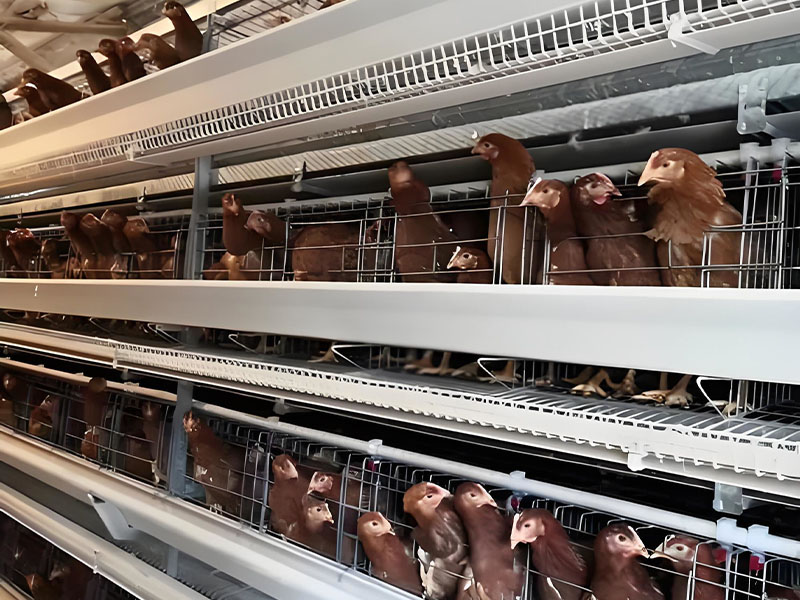
Benefits in economy, food safety and animal welfare further accelerate market penetration. In terms of cost reduction, automated egg collection systems support 24-hour stable unmanned operation, cutting farm labor investment and management costs significantly. In terms of food safety, the fully enclosed automatic collection process avoids direct human contact with eggs, eliminating secondary pollution and fully complying with global food safety and green breeding standards. Meanwhile, low-noise mechanical operation reduces human disturbance in chicken houses, relieves laying hens’ stress responses, stabilizes egg production performance, and effectively improves overall breeding benefits.
Regional market development shows obvious hierarchical characteristics. Driven by national intelligent farming policies, the Asian poultry breeding market has grown rapidly, with China’s large-scale layer farm intelligent renovation plan driving continuous growth in equipment demand and rising industry concentration. Europe and North America, which have mature smart agriculture systems, focus more on high-end robotic egg collection equipment and sustainable energy-saving models, with higher requirements for equipment intelligence, energy efficiency and environmental protection.
Looking ahead, the poultry egg collection machine industry will continue to move toward high intelligence, full-process integration and green sustainability. With the continuous integration of machine vision recognition, intelligent egg sorting and automatic packaging technologies, future equipment will realize one-stop intelligent production from egg collection, screening and cleaning to centralized storage. Industry experts predict that by 2030, more than half of large-scale global layer farms will adopt AI-powered automated egg collection systems, which will comprehensively promote the high-quality and efficient development of the global poultry breeding industry.



 EN




