Traditional egg collection methods face prominent industry pain points. Manual egg picking requires massive labor input, with low efficiency and high error rates, and long-term repetitive work easily causes worker fatigue. Meanwhile, manual contact greatly increases the risk of egg contamination and breakage, with the manual breakage rate ranging from 3% to 8% in conventional farming operations . Early semi-automatic egg collection devices, such as fixed conveyor belt systems, can only adapt to standardized cage farming scenarios and fail to collect scattered floor eggs, which account for 2% to 15% of total egg production in large-scale layer houses with 100,000 hens . These limitations have long restricted the refinement and profit improvement of poultry farming, creating huge market demand for upgraded intelligent egg collection equipment.
The most cutting-edge technological breakthrough in 2026 comes from the innovative application of humanoid robot egg collection technology in the United States, marking a new era of full-scene intelligent egg collection. In June 2026, North Carolina State University (NCSU) released the latest test results of its independently developed humanoid egg collection robot at the 6th Annual Georgia Precision Poultry Farming Conference, achieving successful autonomous collection of floor eggs in commercial layer houses for the first time . Unlike traditional fixed and rail-type egg collection machines, this humanoid robot is equipped with high-precision tactile sensors and AI visual recognition systems. It can adjust gripping pressure in real time according to egg size, shape and surface texture, effectively avoiding egg breakage during the picking process.
To adapt to the complex breeding environment of poultry houses, the R&D team adopts virtual reality (VR) simulation training technology to pre-train the robot’s pick-and-place, transfer and walking movements, eliminating equipment trial and error costs and flock disturbance caused by on-site debugging . At present, the robot has mastered the core action of cross-hand egg transfer, and researchers are optimizing its gait algorithm through reinforcement learning to solve the walking instability problem caused by uneven litter layers in chicken houses. This technological breakthrough fills the global gap in intelligent collection of scattered floor eggs, and the modular design of the robot can be further extended to poultry house environmental monitoring, dead bird removal, and feeding equipment inspection in the future, realizing multi-scene intelligent management of poultry farms .
While disruptive robot technology emerges, mainstream intelligent egg collection machine products are also undergoing iterative upgrades and global market expansion in 2026. Traditional mainstream intelligent egg collection systems represented by European and Chinese brands have realized integrated functions of automatic collection, transmission, sorting and packaging. Gartech’s 2026 upgraded egg collection system applies food-grade soft conveyor belts and high-precision optical sensors, which can automatically identify damaged and defective eggs during the collection process, reducing the overall egg breakage rate of farms to below 1% . Guangxing IoT’s new centralized egg belt conveying and automatic grading system, launched in March 2026, optimizes the transmission structure, realizes seamless docking from nesting box collection to automatic crate packing, and improves the overall operating efficiency by 20% compared with traditional equipment .
In terms of global market layout, Chinese intelligent poultry farming equipment brands have accelerated their overseas expansion in 2026. In March 2026, Zhuoyi Animal Husbandry showcased its full set of intelligent egg collection and poultry breeding equipment at the AgroWorld Uzbekistan Exhibition, targeting the Central Asian market with tight land resources and rapidly developing intensive poultry farming . This move further promotes the popularization of Chinese intelligent egg collection technology in emerging markets such as Central Asia and Southeast Asia. At the same time, European leading brands including Vencomatic Group, Moba and Big Dutchman continue to optimize their intelligent equipment systems, focusing on improving equipment energy conservation and environmental protection performance to adapt to the stringent agricultural green development standards in Europe .
The booming technological innovation and market application have driven the rapid growth of the global intelligent egg collection machine market. According to the latest 2026 market research data, the global egg collection robot market size will grow from US$150 million in 2025 to US$443 million in 2032, with a compound annual growth rate (CAGR) of 16.8% from 2026 to 2032 . Another industry report shows that the global automatic egg collection system market will reach US$137.81 million in 2026, maintaining a steady growth rate of 6.31%, and is expected to exceed US$198 million by 2032 . In 2025, the global sales volume of intelligent egg collection robots reached 3,400 units, with a production capacity of 5,800 units, and the product gross profit margin stabilized at 25%-30%, reflecting strong industrial profitability and market vitality .
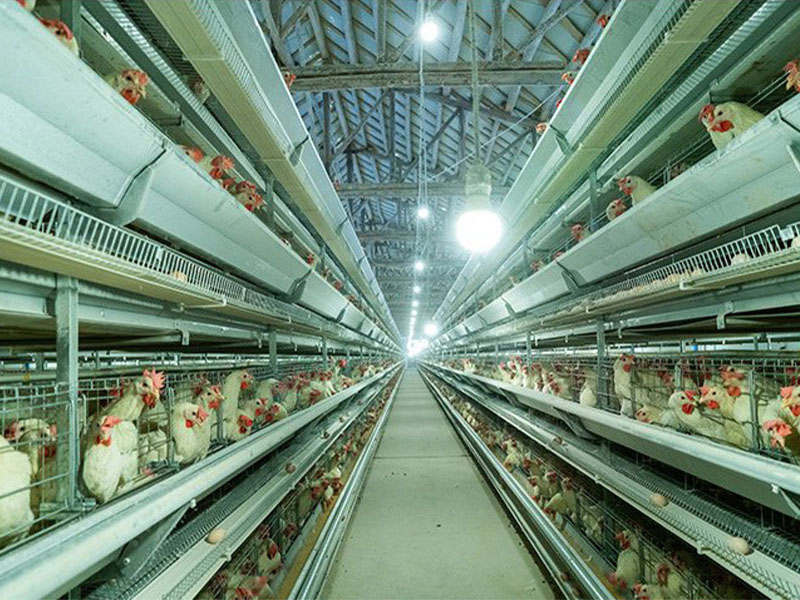
In terms of practical farm application benefits, intelligent egg collection machines have shown significant economic and production advantages. Compared with manual operation, fully intelligent equipment can operate 24 hours continuously, covering all collection cycles of layer houses, and improve egg collection efficiency by more than 80% . The standardized and low-contact collection mode effectively reduces egg surface contamination, improves egg grade and market value, and greatly reduces labor dependence. For large-scale farms with 100,000 or more laying hens, intelligent egg collection equipment can save dozens of manual labors every year, while stabilizing the egg breakage rate at an ultra-low level, comprehensively improving farm profitability . In addition, the intelligent monitoring system built into the new generation of equipment can synchronously collect breeding environment data such as temperature and humidity in the chicken house, providing data support for fine breeding management .
Looking ahead, the development trend of intelligent poultry egg collection machines in the global market is clear. First, multi-scene adaptive technology will become the core research and development direction. Humanoid robots and mobile intelligent collection equipment will gradually solve the pain points of scattered egg collection and complex terrain adaptation, realizing full-coverage unmanned egg collection in cage breeding, flat breeding and free-range scenarios. Second, equipment integration and intelligence will be further upgraded, with deep integration of AI vision, big data analysis and IoT technology to realize intelligent early warning of egg quality, automatic statistics of egg production, and linkage management of poultry house environment . Third, market popularization will continue to sink, and intelligent egg collection equipment will gradually move from large-scale industrial farms to medium and small-sized farms in emerging markets, driving the overall upgrading of global poultry farming intelligence.
In conclusion, 2026 is a key year for the iterative upgrading and global popularization of intelligent poultry egg collection machine technology. Driven by cutting-edge humanoid robot technology and traditional equipment optimization and innovation, the intelligent egg collection industry is breaking through previous technical limitations. With the continuous expansion of the global market and the continuous improvement of agricultural intelligence standards, intelligent egg collection machines will become the standard configuration of modern poultry farming worldwide, providing strong technical support for the high-quality, efficient and green development of the global poultry industry.



 EN




